

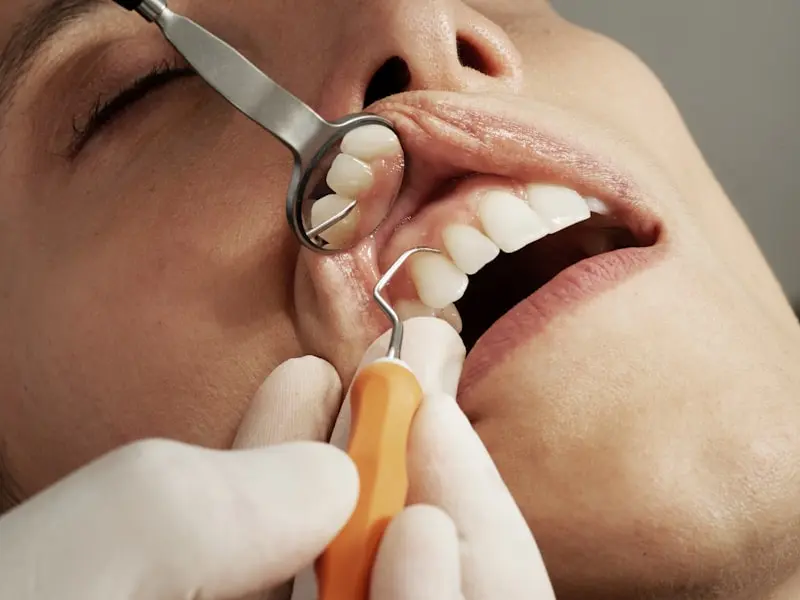
Invisalign at Pear Tree Dental in Nottingham starts at £2,800. ClearCorrect clear aligners start at £2,400, and retainers to hold the result afterwards are from £150 per arch. Your final figure depends on how far your teeth actually need to move — a mild case uses fewer aligners and costs less than a complex bite correction. We give you a fixed, written price at your consultation, before you commit to anything.
That is the number most practices will not print. The rest of this guide is the part that matters just as much: whether aligners or fixed braces are right for you, how long it takes, and what wearing them is actually like day to day.
What Invisalign costs, and what changes the price
Straightening is not one product at one price. Three things move the figure, and any dentist quoting you without seeing your teeth is guessing:
How far your teeth need to move. Mild crowding or a little spacing needs fewer aligners than correcting a significant overbite. Fewer aligners, lower cost.
Which system suits your case. ClearCorrect (from £2,400) and Invisalign (from £2,800) are both clear aligner systems; which one fits depends on the movements your case needs, not on preference alone.
What you want included afterwards. Retainers are from £150 per arch and are not optional if you want the result to last. Some patients also add whitening or composite bonding once teeth are straight — a common finishing step, priced separately.
Fixed braces are quoted case by case at consultation. As a general UK guide, metal brackets are typically the lower-cost fixed option, ceramic (tooth-coloured) brackets cost more, and lingual braces — fitted behind the teeth so they are invisible from the front — are the most expensive fixed option.
NHS orthodontic treatment exists for under-18s who meet clinical need criteria (an IOTN score showing significant dental health need). Adults are almost always treated privately: the NHS does not fund alignment for cosmetic reasons.
How each system works
Fixed braces — metal or ceramic — use brackets bonded to the teeth and wires adjusted over time. They are always in place, so they work continuously without relying on you to remember anything.
Invisalign uses a series of custom-made, removable clear aligners. Each set is worn for about one to two weeks, then swapped for the next, moving teeth a small amount at a time. Because they are removable, the results rest on you: aligners need to be worn 20 to 22 hours a day. Take them out too often and treatment stalls.
Treatment time
For mild to moderate crowding or spacing, Invisalign often takes 6 to 18 months. Fixed braces for similar cases might take 12 to 24 months — though complex cases can sometimes finish in a comparable timeframe with fixed braces, because the clinician has more direct control over how teeth move.
Neither system is reliably faster. Wear aligners for fewer hours than instructed and treatment takes longer, or the result falls short. With fixed braces, force is managed continuously by the clinician, so progress is more predictable in complex cases.
What wearing aligners is actually like
Patients who have been through it are consistently honest about two things, and it is better to hear them now than to be surprised in week one.
The first week is uncomfortable. Each new aligner is tight — that tightness is the treatment working. Most people find it settles within a few days and that ordinary painkillers cover it. It is pressure, not sharp pain.
It is a faff, and the faff is permanent. The aligners come out to eat or drink anything other than water, and teeth should be cleaned before they go back in. If you drink tea or coffee all day, this is the adjustment people underestimate — not the pain.
Retainers are for life, not for a year. Teeth drift back without retention. Expect to wear a retainer at night indefinitely, or have a fixed wire bonded behind the front teeth. Budget for replacement retainers over the years — from £150 per arch.
None of this is a reason not to do it. Patients who complete treatment overwhelmingly say they would do it again — the point is that the trade-off is real and you should go in with your eyes open.
Comfort and lifestyle with fixed braces
Fixed braces can be sore after adjustments, and brackets and wires occasionally catch the inside of the cheeks — orthodontic wax helps. Hard and sticky foods need avoiding, because they break brackets and bend wires. In return, you never have to remember to put anything back in.
Which cases suit which system?
Aligners have improved enormously and now treat many moderate cases that once needed fixed braces. Complex cases — significant overbite correction, large tooth movements, multiple extractions — are still handled more predictably with fixed braces.
Mild to moderate crowding or spacing: clear aligners are often a good fit.
Significant bite correction (overbite, underbite, crossbite): fixed braces or a combined approach are often better.
If you know you will struggle with compliance: fixed braces remove the question of whether you remembered to wear them.
If you have bridges, implants or existing restorations: these need assessing before aligners can be planned around them.
Children and teenagers: specialist assessment needed. Invisalign Teen exists, but fixed braces remain more common in adolescence.
Straightening at Pear Tree Dental, Nottingham
We assess your teeth and bite, talk through what you actually want to change, and recommend the approach that suits your case — including telling you when you do not need treatment at all. You get a written price before you commit, and there is no obligation to proceed. Book a consultation or call us on 0115 931 2935. We are at 22 Nottingham Road, Burton Joyce, NG14 5AE — minutes from Gedling, Arnold and Lowdham. Members receive 10% off selected treatments; ask us which apply to your plan.
For a fuller picture of what is available locally — Invisalign, ClearCorrect and fixed braces side by side, with prices and the step-by-step process — see our guide to clear braces and Invisalign in Nottingham.
FAQ
Q: How much does Invisalign cost in Nottingham? A: At Pear Tree Dental, Invisalign starts at £2,800 and ClearCorrect from £2,400. The final price depends on how much movement your case needs. You get a fixed written quote at consultation — we do not start work on an estimate.
Q: Can I pay for Invisalign monthly? A: Most patients spread the cost rather than paying a lump sum. Ask us at your consultation what payment options apply to your treatment plan.
Q: Is Invisalign as effective as braces? A: For mild to moderate cases, clinical evidence shows comparable results when aligners are worn as directed. For complex bite correction, fixed braces often give more predictable outcomes.
Q: Does it hurt? A: The first few days of each new aligner feel tight and uncomfortable — that pressure is the treatment working. Most patients manage it with ordinary painkillers and say it settles quickly.
Q: Can adults have braces or Invisalign? A: Yes. There is no upper age limit for orthodontic treatment, and adults are a growing share of orthodontic patients. Both systems work well in adults.
Q: Will I need a retainer afterwards? A: Yes, whichever system you choose. Teeth shift back without retention. Most patients wear a removable retainer at night long-term (from £150 per arch), or have a fixed wire bonded behind the front teeth.
Clinically reviewed by Javaad Mirza (MD, BDS), Principal Dentist at Pear Tree Dental, GDC No. 290378. Last reviewed July 2026. Prices correct at the time of review and confirmed in writing at consultation. This article is general information, not a diagnosis — the only way to know which option suits you is an assessment. Book a consultation.