

The short answer: composite bonding (from £150 per tooth at Pear Tree Dental) is quicker, cheaper and usually reversible, while porcelain veneers (from £750 per tooth) last longer and resist staining but cost more and permanently change the tooth. Bonding is the lower-commitment starting point; veneers are the long-term answer. Both change the shape, shade and symmetry of your front teeth, and the right one depends on how much of your tooth you are willing to give up. Here is how to decide.
What is composite bonding?
Composite bonding uses a tooth-coloured resin that is applied directly to the tooth, shaped by hand and then hardened with a curing light. It usually needs little or no drilling, can often be completed in a single visit, and is frequently reversible because little natural tooth is removed. It is well suited to small chips, minor gaps and slightly uneven edges. At Pear Tree Dental in Nottingham, composite edge bonding starts from £150 per tooth.
What are veneers?
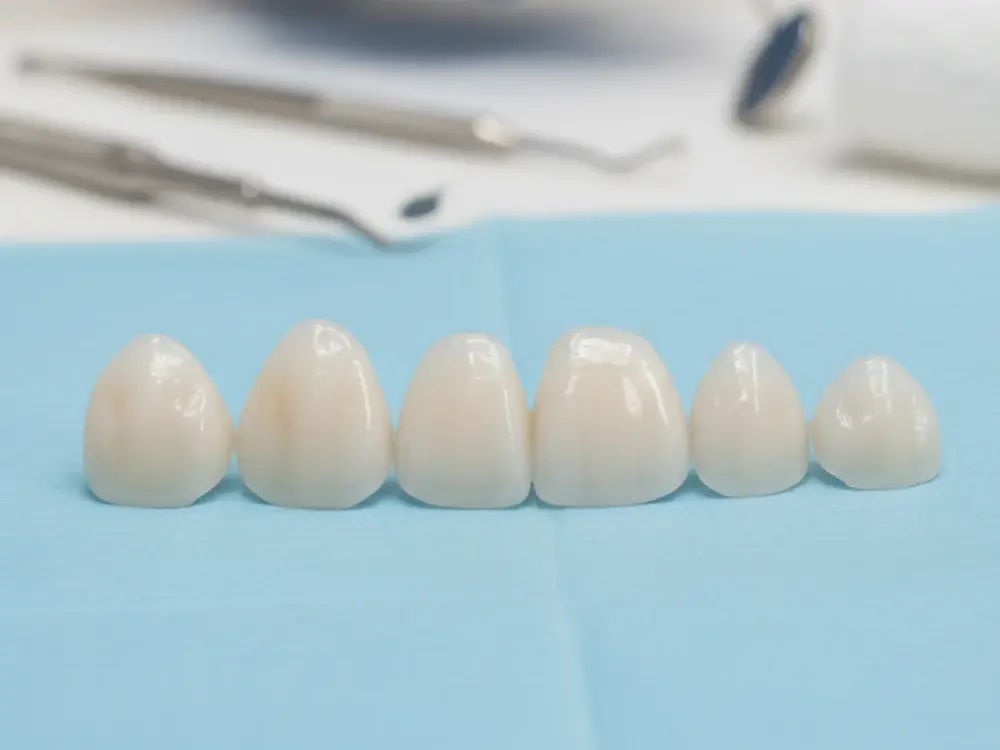
A veneer is a thin shell bonded to the front of the tooth. Porcelain veneers are custom-made in a laboratory from your impressions or scans, then bonded into place at a second visit. They are highly stain-resistant and can produce a very natural, lifelike finish, but they often require a small amount of enamel to be removed, which makes the change permanent. At Pear Tree, porcelain veneers start from £750 per tooth, and composite veneers — which sit closer to bonding in approach — start from £300 per tooth.
At Pear Tree, cosmetic bonding and veneer work is led by our principal dentists. Dr Imrana Ishaque (BDS, MFDS, GDC 252578) has a special interest in restorative and aesthetic dentistry, with a particular interest in cosmetic treatments, and will talk you through what is realistic for your teeth at your consultation.
Composite bonding vs veneers: the key differences
Cost — bonding (from £150 per tooth) is significantly cheaper per tooth than porcelain veneers (from £750 per tooth).
Time — bonding is often done in one visit; porcelain veneers usually take two appointments.
Durability — bonding typically lasts five to seven years; porcelain veneers can last ten to fifteen years or more.
Staining — porcelain resists tea, coffee and red wine better than composite resin.
Reversibility — bonding is usually reversible; porcelain veneers that require enamel removal are not.
Repairs — chipped bonding can often be patched; a damaged porcelain veneer usually needs replacing.
Which one is right for you?
Composite bonding tends to be the better choice when you want a quick, affordable improvement to one or a few teeth, want to keep the option of reversing the work, or are correcting minor chips and gaps. Porcelain veneers are often better when you want the most durable, stain-resistant result, are changing the appearance of several teeth at once, or want a dramatic and long-lasting transformation. Many patients land somewhere in between, and the right answer depends on your teeth, your budget and your priorities.
It is also worth knowing that the two are not mutually exclusive. Some smile plans combine approaches — for example whitening (from £350) first, then bonding on a few teeth — and a thorough consultation will identify the least invasive option that achieves your goal. Where a fuller change is wanted, Dr Javaad Mirza (MD, BDS) plans complete smile makeovers that may combine bonding, veneers and alignment.
Spreading the cost with membership
If you are a regular patient, it is worth knowing that Pear Tree membership plans start from £10.95 a month and include your routine check-ups, hygiene visits and X-rays, plus 10% off selected treatments and worldwide dental accident and emergency cover on every plan. For families, the Family Plan covers everyone from £49.50 a month. Members on our Complete Care plan save about £177 a year against paying for the same routine care appointment by appointment — ask us which treatments the discount applies to.
Making the decision in Nottingham
The best way to choose is a consultation, where a dentist can assess your teeth, talk through realistic results and give you a written quote for each option. Book a consultation or call us on 0115 931 2935. You can also explore our cosmetic dental services to learn more.
FAQ
Q: Is composite bonding cheaper than veneers? A: Yes. At Pear Tree Dental, composite edge bonding starts from £150 per tooth, while porcelain veneers start from £750 per tooth. Bonding is the more budget-friendly option upfront, though veneers last longer.
Q: Which lasts longer, bonding or veneers? A: Porcelain veneers last longer — often ten to fifteen years or more — compared with around five to seven years for composite bonding. Bonding can, however, be repaired more easily if it chips.
Q: Is composite bonding reversible? A: In most cases, yes, because little or no natural tooth is removed. Porcelain veneers that require enamel removal are a permanent change and cannot be reversed.
Q: Can I whiten my teeth before bonding or veneers? A: Yes, and it is often recommended. Whitening only works on natural enamel, so it is best done before the bonding or veneers are matched to your new shade.
Q: How do I decide which is right for me? A: Book a consultation so a dentist can examine your teeth and recommend the least invasive option for your goals. Book online or call 0115 931 2935.